Loading...
Serving Inglewood, CA and surrounding areas. (424) 414-1138
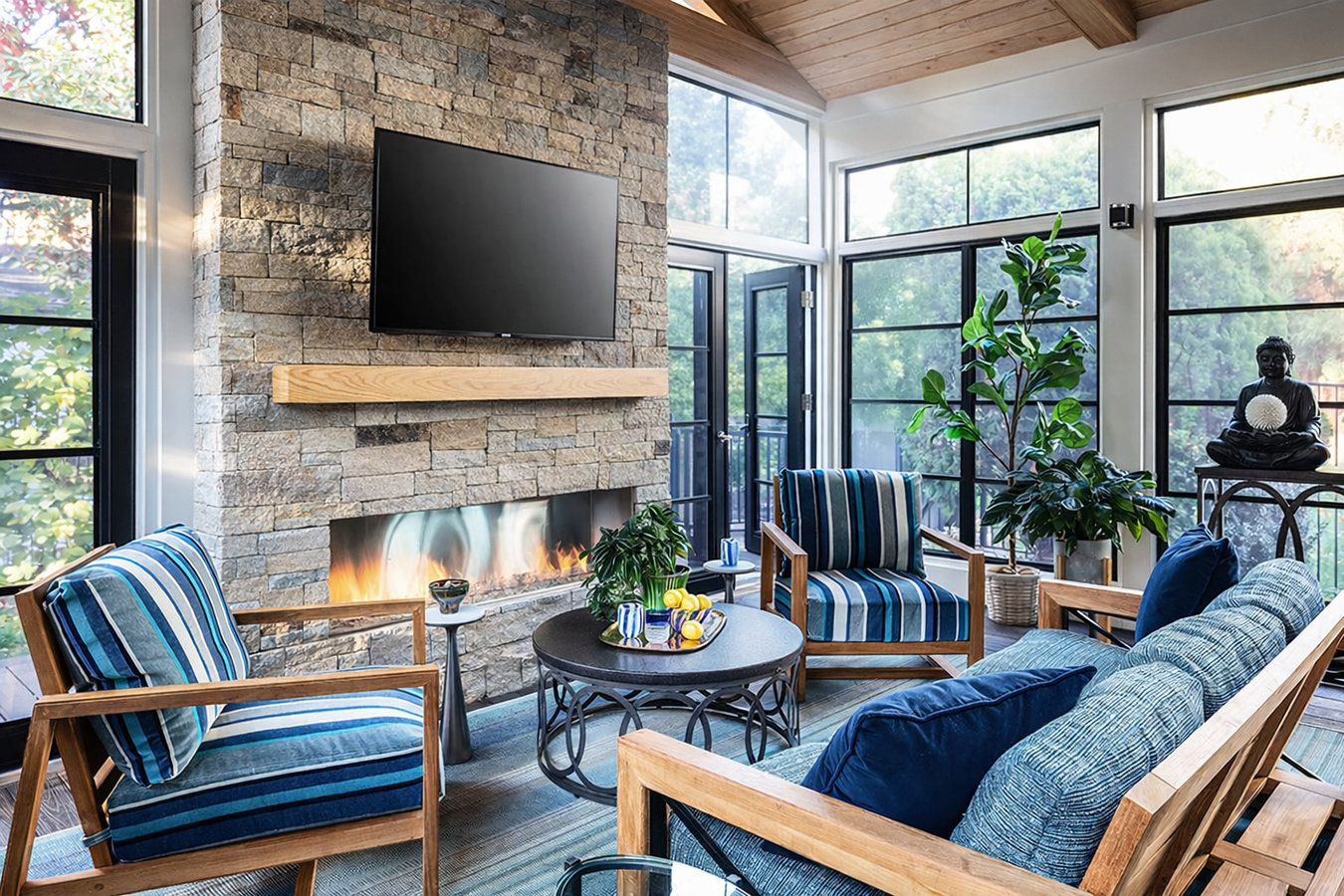
Inglewood Sunrooms & Patios builds all season rooms, sunroom additions, and patio enclosures for Santa Monica homeowners - from pre-1960 Ocean Park bungalows to mid-century condos near Wilshire. We specify coastal-rated framing and glazing materials that hold up to the marine layer and salt air, handle every permit with the Santa Monica Building and Safety Division, and respond within one business day.
Santa Monica's marine layer keeps outdoor spaces damp and cool through much of May and June, and even summer evenings can turn cool fast near the beach. An all season room with insulated glass and a properly sealed frame stays comfortable through these shifts without needing to close the space off entirely. Read through how our all season room design and build process works and what coastal material specifications we use.
Many Santa Monica homes from the 1920s through the 1950s have rear yards that have never been fully used. A permitted sunroom addition converts that outdoor space into a bright, usable room and adds documented square footage to a property where values consistently top one million dollars. We design every addition to match the stucco exterior and roofline of the existing home so the addition reads as part of the original structure.
Santa Monica homes typically have compact rear yards, and a patio enclosure is one of the most efficient ways to get more usable space from what is already there. The morning marine layer makes an open patio uncomfortable for a large portion of the year, and enclosing it with glass and aluminum framing solves that problem without a full addition. We verify Santa Monica's specific setback and lot coverage requirements before finalizing any enclosure footprint.
While Santa Monica rarely gets cold by most standards, the difference between a three season and a four season sunroom matters in a city with persistent coastal moisture. A fully insulated four season room with a climate-controlled frame stays dry and comfortable year-round, protects interior finishes from the salt air that works into unsealed spaces, and qualifies as conditioned square footage under the Santa Monica building code when properly permitted.
For Santa Monica homeowners who want to open up their outdoor space while keeping insects out and the sea breeze in, a screen room is a practical and lower-cost option. The frames work well in Santa Monica's mild climate and provide protection from the morning coastal fog without fully enclosing the space. We specify screen frame hardware rated for salt-air exposure on every coastal project to prevent the rust and corrosion that standard hardware develops quickly near the beach.
Older enclosed patios and sunrooms on Santa Monica properties often have issues that go beyond cosmetic wear - corroded frame hardware, failed sealant at multiple joints, and fogged glass units from moisture infiltration over years of coastal exposure. Remodeling with marine-rated replacement materials addresses the root cause rather than patching symptoms. For Santa Monica bungalows where the original structure has already been modified over decades, we assess the full condition of the framing before recommending a scope.
Santa Monica sits directly on the Pacific Ocean, and the combination of salt air and daily marine layer moisture creates a more demanding environment for outdoor structures than most homeowners realize. The marine layer - the low coastal fog that rolls in from the ocean most mornings - keeps exterior surfaces damp for hours at a time and deposits salt that works into cracks in stucco, caulk joints, and metal hardware. A screen room or sunroom built with standard inland materials in Santa Monica will show rust on the frame fasteners within one to two seasons, and sealant at the wall junction will begin failing before the first year is out. Specifying the right materials from the start is not optional in a coastal city - it is the difference between a structure that holds up for twenty years and one that needs rework in three.
The age and variety of Santa Monica's housing stock add another layer of complexity. A significant share of the homes in Ocean Park, Sunset Park, and Mid-City were built between the 1920s and 1950s - stucco bungalows and Spanish Colonial Revival houses with original plaster walls, old-growth wood framing, and no insulation in the walls by modern standards. These homes were built before current energy codes, seismic requirements, or window performance standards, and attaching a new sunroom to a structure this age requires a careful assessment of what the existing walls and rooflines can support. A contractor who treats a 1930s Santa Monica bungalow like a 2005 tract house will encounter problems mid-project that should have been identified during the estimate.
Our crew works throughout Santa Monica regularly, and we are familiar with the permit process through the Santa Monica Building and Safety Division - handling plan check submissions, inspection coordination, and all permit documentation. Santa Monica operates under its own municipal code, which differs in some details from Los Angeles County requirements, and knowing the city's specific review process keeps projects on schedule.
Santa Monica covers just 8.3 square miles, but the neighborhoods feel distinct. Ocean Park in the southern end has some of the city's oldest bungalows and the most consistent mix of pre-war housing stock. Sunset Park sits further inland and has a quieter residential character with a range of home sizes. The blocks near Montana Avenue carry higher home values and often larger lots. Closer to the beach, Palisades Park runs along the bluffs above the Pacific Coast Highway and is the daily landmark that orients much of the city. Third Street Promenade and the Santa Monica Pier are where most of the city's street-level activity concentrates, and the residential neighborhoods sit largely east of that activity.
We also serve homeowners in the communities surrounding Santa Monica. If your project is in Culver City or in Inglewood, we are active in both cities and understand each municipality's permit requirements and housing stock.
Reach us by phone or through the contact form. We respond within one business day to schedule a convenient time - no sitting in a callback queue or waiting a week to hear whether anyone is available.
We visit the property, measure the space, assess the existing structure - including any quirks in older Santa Monica homes - and review the applicable setback and lot coverage requirements for your parcel. The written estimate we provide is accurate to what the job involves, with no cost surprises after the contract is signed.
We submit the permit application and all plan check documents to the Santa Monica Building and Safety Division on your behalf. Construction begins once the permit is issued - we keep the work site orderly and work efficiently given the tight lot conditions common throughout the city.
We schedule and pass the final city inspection, then walk you through the completed room before leaving. The permit closes with the city, and you have a properly documented addition recorded on your Santa Monica property with no open items.
We serve all of Santa Monica - Ocean Park, Sunset Park, Mid-City, and beyond. Free estimate, no obligation. Call or submit the form and we will respond within one business day.
(424) 414-1138Santa Monica is a coastal city of about 91,000 residents sitting on the Pacific coast of Los Angeles County, covering just 8.3 square miles. Despite its small footprint, the city has distinct neighborhoods that feel genuinely different from one another. Ocean Park in the south is filled with small stucco bungalows and Spanish Colonial Revival homes from the 1920s and 1930s. Sunset Park and Mid-City have a mix of housing eras from the 1930s through the 1970s. The blocks near Montana Avenue and the northern residential areas carry higher home values and generally larger lots. Palisades Park runs along the ocean bluffs and is a daily landmark for the entire city, and the Santa Monica Pier at the foot of Colorado Avenue is the city's most recognized feature.
Santa Monica has a roughly even split between homeowners and renters - about half of households own their homes, and the other half rent. Home values across the city consistently rank among the highest in Los Angeles County, with medians well above one million dollars. The housing stock skews older: a substantial share of units were built before 1960, and pre-war homes are common in the southern neighborhoods. This means most projects in Santa Monica involve working with older structures rather than new construction, which requires a different kind of contractor knowledge. Neighboring Culver City to the southeast and Inglewood further inland are both cities we serve regularly, and homeowners throughout the Westside can reach us for a free estimate.
Keep bugs out while letting fresh air and sunlight flow freely in.
Learn MoreConvert your existing patio into a fully enclosed sunroom space.
Learn MoreTurn your deck into a beautiful enclosed room you can use all year.
Learn MoreCall today or submit the form for a free on-site estimate. We pull the permits, use coastal-rated materials, and build additions that hold up for decades on homes like yours.